

Issue 29 (July 2026) – Ignore, Cut or Rebuild?

Happy Canada Day! One quick thing before I get to the main story.
I am thankful to live in a country where we enjoy freedom, opportunity and wealth vs. many other countries. Canada’s not perfect, but it’s better than many other countries … and I hope it stays that way.
I’m going to be enjoying some time outside and taking a few days off (mega long-weekend).
What are you up to this Canada Day?

Hall-of-Famer Roy Halladay almost didn’t have a baseball career.
Did you know that in 2000, he had the worst ERA (10.64) of any pitcher with at least 50 innings?
He almost got released by the Toronto Blue Jays after that awful season.
Instead, their pitching coach (Mel Queen) knew better.
Mel knew Roy had great potential but something was wrong.
The Blue Jays demoted him to Class-A ball, which is the lowest professional tier.
The plan was to rebuild his mechanics and confidence through daily help.
What happened?
Roy made it back to the majors, won two Cy Young Awards, threw a postseason no-hitter, and became a Hall of Famer.
Why am I discussing this?
Because right now, you may have a “Roy Halladay” on your team.
Someone who’s underperforming.
You can ignore him/her and hope the problem fixes itself (newsflash – it doesn’t).
You can cut him/her loose.
Or you can demote and give him/her a chance to rebuild.
Think about it.
Sports teams rebuild. Why can’t companies?
What’s the lesson?
If your employee is struggling, you decide whether s/he keeps getting lit up or has a chance to rework his/her game.
Did you know?
We help businesses recruit accounting, finance, sales and marketing talent, making it easy by providing an affordable flat-fee, premium recruiting solution.
Everything is managed for you – from start to finish. That’s Peace-of-Mind recruiting.
Want to learn more? Let’s schedule a free consultation.
In this issue:
- Succession planning – imagine losing your top employee tomorrow
- How to answer the “Why did you leave?” question
- “No Bull” content recommendations: stuff to watch, podcasts to listen to, and books to read
- And more
Business Briefs
Imagine you lost your top employee tomorrow. What would you do?
Picture this scenario. Your best salesperson hands in her resignation.
There’s no warning. No transition plan. No time to prepare.
Now what?
Succession Planning is Business Insurance
Most companies think of succession (or redundancy) planning as something bureaucratic or “nice to have.”
It’s not.
It’s business insurance.
Reality is simple. If your business can’t function without a single person, it means you’re vulnerable.
What Companies Often Overlook
When leaders think about succession, they usually stop at “we have backups.”
But good succession planning runs deeper. Here are a few things to keep in mind.
1. Knowledge Concentration
Where does critical information live? If it’s in someone’s head, then you have dependency.
2. Relationship Ownership
In many companies, client relationships are usually owned by people. When there’s only one contact or there’s no visibility into conversation or transaction history, that relationship is vulnerable.
3. Process Clarity
It’s normal for people to operate on instinct. We can get busy and may not write stuff down, or we don’t share insight on things like HOW a process works.
For example, HOW does your best salesperson prospect? HOW does he qualify them? And HOW does he move the prospect through to close?
If the company doesn’t know this, it will be very difficult to scale success.
4. Talent Bench Strength
Many businesses underinvest in developing bench-strength: no one is qualified to step into that role.
When a key person leaves, it can result in a performance or culture gap, and can lead to rushed knee-jerk hiring to fill the role. I often hear about companies needing to fill a role quickly, only to discover the hired person wasn’t the right fit. That wastes time and money.
Practical Succession Planning
Here are a few ideas to mitigate risk:
1. Build “Shadowing” Into the Culture
No key role should operate alone, so that if someone disappears tomorrow, you’ve got backup. Encourage a team approach instead of solo work effort.
2. Systematize Knowledge
Documentation needs to be:
- Easy to access
- Updated regularly
- Actually used
If it’s not built into your culture, it won’t help when you need it.
3. De-Risk Client Relationships
You want multi-threaded relationships, not single points of contact.
Practical steps:
- Require at least 2 company contacts per key account
- Introduce account managers, not just salespeople
- Schedule joint check-ins with multiple stakeholders
Clients should trust your company, not just one person inside it.
4. Build a Succession Pipeline
This is where most companies fall short.
Ask yourself:
- Who could step into this role today?
- Who could be ready in 90 days?
- What gaps need to be filled to make that happen?
If you don’t have answers, that’s the risk.
The Mindset Shift Leaders Need to Make
Think of redundancy planning as insurance.
People will eventually leave, so instead of panicking, take steps to implement systems where losing an key employee doesn’t put your company at risk.
The goal isn’t to replace your top performers.
It’s to build an organization where losing one doesn’t break you.
Need help creating a succession plan or have questions? Let’s chat.
Career Corner
How to Talk About Leaving Your Last Role
Explaining why you left your last job is one of the most common and sensitive interview questions. I always ask “why did you leave?” in interviews so that I can understand career path and patterns.
The key is to be honest, professional, and forward-focused.
My advice? Keep it simple and factual.
Whether it was restructuring, lack of growth, or a better opportunity, be clear without over-explaining.
Avoid negativity
Don’t criticize your former employer, manager, or team. Instead, reframe your answer around what you were seeking: development, new challenges, or alignment with your long-term goals.
Focus on positive transition
Focus on positive transition. For example: “I learned a lot in my previous role, but I’m ready to take on more responsibility and grow in a new direction.” This shows maturity and intent.
Keep it honest
I check that the story I’m being told is true, so the last thing you want to do is get caught in a lie and kill your chances at being offered the role.
Need help refining your story? Reach out and let’s schedule a review. I’m happy to help you position your experience with confidence.
No Bull Content Recommendations

Watch: The Crash
The Crash is a Netflix documentary that investigates the July 2022 deaths of Dominic Russo and Davion Flanagan in Strongsville, Ohio.
The victims were killed when their vehicle, driven by 17-year-old Mackenzie Shirilla, slammed into a brick warehouse wall.
The documentary looks at the crash, the investigation, trial and results. I was fascinated by how much data a car’s “black box” collects.
If you like Docs, I think you’ll enjoy this one.
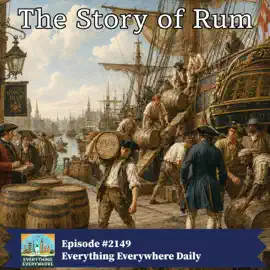
Listen: The Story of Rum
Yo ho ho … and a bottle of rum.
Rum isn’t just a spirit that is used in cocktails. It is unique amongst beverages in how it has shaped history.
Rum has driven the creation of sugar plantations, played an important role in the British Navy, piracy, slavery, and global commerce.
Today, it’s lost its global importance and has become an ingredient in cocktails and an important part of Caribbean economies.
Learn more about Rum’s journey from an empire-building by-product to a craft-made delicacy.
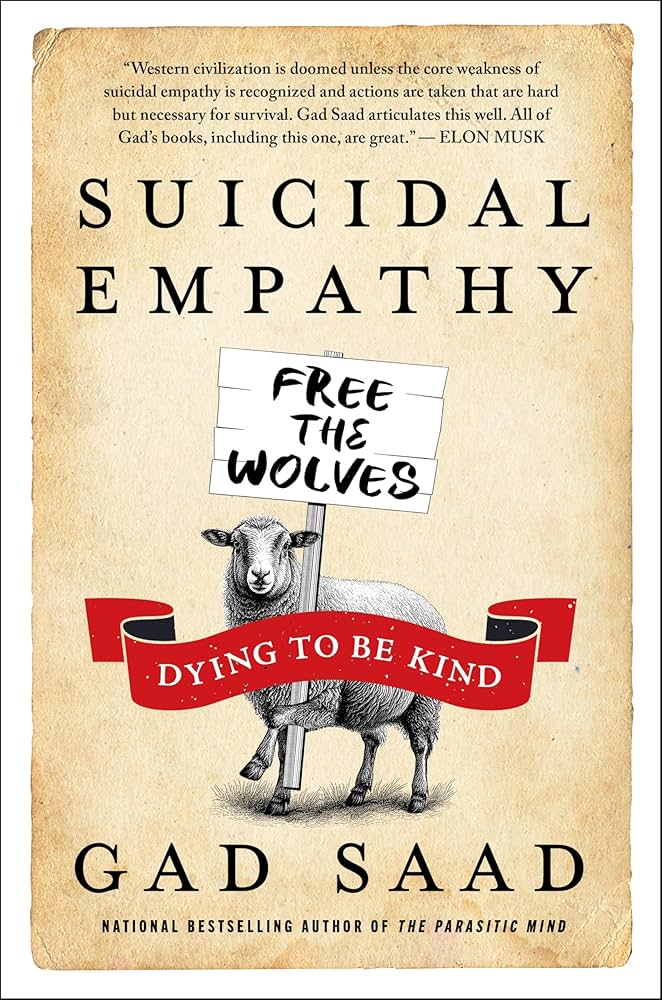
Read: Gad Saad – Suicidal Empathy
You know the upside down world we live in? The one where people support terrorists? Or where the accused gets sympathy instead of the victim?
That’s suicidal empathy.
Suicidal Empathy, a term coined by evolutionary behavioral scientist Dr. Gad Saad, refers to a pathological condition where misdirected compassion causes a society to prioritize the feelings of specific groups over its own survival, values, and truth.
He argues that suicidal empathy prioritizes minority groups such as illegal immigrants at the expense of survival and security of one’s own groups and values.
Available as a hardcover, eBook and audiobook.
Can I help?
Peace-of-Mind Recruiting
We help businesses recruit accounting, finance, sales and marketing talent, making it easy by providing an affordable flat-fee, premium recruiting solution.
Everything is managed for you – from start to finish. That’s Peace-of-Mind recruiting.
Want to learn more? Let’s schedule a free consultation.
Know someone job searching?
Candidates can upload their resume directly to my candidate database.
Career Services
Did you know? I offer career services to help with job search, interview strategy, and navigating careers. Three career changes and the lessons I learned help me prepare you better.
Sometimes people are rusty and need job search or interview guidance if they haven’t been in the job market for a while. There is a strategy involved to land an interview, control the interview, and get an offer.
Learn how to compete better in the job market. Schedule time with me today.
If you need more robust executive coaching, I have an amazing network and happy to refer you. Please reach out to me at jason@noblesearchgroup.com.
Can you help?
Did you enjoy this newsletter? Please share it.
Have feedback? Send me a note: newsletter@noblesearchgroup.com
Know anyone who needs recruiting help? Referrals are appreciated.
Thanks for reading.