

Issue 32 (Oct 2026) – The value of experience

#Boss and I recently went to see Toto, Christopher Cross, and The Romantics in concert.
Some of you will know those names immediately. Others might need to look them up.
While there have been lineup changes over the years, many of the musicians are now in their 70s.
Yet here they were performing in front of 16,000 people for more than four hours. They were talented, energetic, and still at the top of their game.
Watching these performers got me thinking about something I see in hiring.
Experienced candidates are often viewed through a different lens. Some employers assume they’re slowing down, resistant to change, or simply waiting for retirement. In other words, they’re overlooked.
The irony?
Just like these musicians, many veteran professionals are still highly engaged, motivated, and eager to make an impact.
Experience doesn’t automatically mean someone is winding down. In many cases, it means they’ve spent decades building judgment, resilience, and expertise that can benefit a company.
What’s the lesson?
The next time you’re interviewing an experienced candidate, challenge your assumptions.
If we can appreciate the value of experience on stage, why do we so often overlook it in the workplace?
P.S. This is footage from the Toto concert. I think they sound pretty good. What do you think?
Did you know?
We help businesses recruit accounting, finance, sales and marketing talent, making it easy by providing an AI-driven, affordable flat-fee, premium recruiting solution.
Everything is managed for you – from start to finish. That’s Peace-of-Mind recruiting.
Want to learn more? Let’s schedule a free consultation.
Business Briefs
The Most Expensive Employee Is the One You Haven’t Hired Yet
Business leaders spend a lot of time worrying about hiring mistakes. That’s understandable. A bad hire can be expensive, disruptive, and frustrating.
But in my experience, many organizations overlook an equally costly problem: leaving important positions vacant for too long.
When a role remains open, the salary expense disappears from the budget. It can feel like the company is saving money. The reality is usually the opposite. The costs don’t disappear. They simply become harder to see.
The Vacancy Cost Nobody Tracks
Most organizations can tell you exactly what they pay an employee. Fewer can tell you what it costs when that employee doesn’t exist.
Consider what happens when a leadership role, finance position, HR role, or key operational position sits vacant:
- Projects slow down
- Decisions get delayed
- Work gets redistributed
- People get overloaded
- Strategic initiatives are pushed aside
- Customers wait longer for responses
- Team members become frustrated
No single event is catastrophic. The damage happens gradually, one missed opportunity at a time.
The Hidden Tax on Your Best People
The first response to a vacancy is usually simple: the work gets divided amongst the rest of the team. That works for a few weeks, but it becomes much more costly after a few months.
High performers start carrying extra responsibilities. Managers take on duties that don’t belong to them. Executives become involved in day-to-day tasks that should have been delegated. Meanwhile, the work they were actually hired to do receives less attention.
The irony is that the employees organizations depend on the most are often the ones who absorb the burden of a vacancy. Eventually, they become exhausted.
And now the company doesn’t have one hiring problem. It has two.
The Opportunity Cost Is Usually Bigger
The largest cost is often not the extra workload. It’s the opportunities that never happen.
A Controller vacancy might delay financial insights that help leaders make better decisions. An HR vacancy might slow hiring during a period of growth. A sales leadership vacancy might mean revenue targets are missed.
Because these opportunities never materialize, they’re rarely measured. But they are real. Businesses don’t grow because positions are vacant. They grow because the right people are in the right seats driving progress.
The Search for Perfect Can Become Expensive
One of the most common reasons vacancies remain open is the search for the perfect candidate. Organizations create lengthy wish lists. They hope to find someone with every technical skill, every leadership competency, industry experience, systems knowledge, and cultural attribute imaginable.
Months pass. Candidate after candidate falls short. Meanwhile, leaders continue carrying the workload. At some point, the cost of waiting becomes greater than the risk of hiring.
Perfect candidates rarely exist. Strong candidates who can create value do.
A Better Question
When discussing an open position, many leadership teams focus on one question: “What will this hire cost us?”
A more useful question may be: “What is this vacancy already costing us?”
The answer usually includes much more than salary. It includes delayed projects, management distraction, employee burnout, slower growth, and missed opportunities.
No Bull Takeaway
Most organizations are careful about the cost of hiring. They should be equally thoughtful about the cost of not hiring. A vacant role may look inexpensive on a budget report.
But if key decisions aren’t being made, growth is slowing, or top performers are carrying work that doesn’t belong to them, the organization is paying for that vacancy every day.
The invoice just arrives in a different form.
Candidate Corner
How to Nail Your Interview in the First 2 Minutes
Most interviews are heavily influenced by the very first question:
“Tell me about yourself.”
It’s one of the most common interview questions, yet it’s also one of the most misunderstood.
Many candidates treat it as an invitation to walk through their entire resume or share their life story. That’s not what the interviewer is looking for.
The purpose of the question is simple. The interviewer wants to quickly determine:
- Are you qualified for this role?
- Why are you interested in this opportunity?
Think of it as your opening statement. Before the interviewer starts digging into your experience, they’re looking for a concise summary that helps them understand why you’re sitting across the table from them.
A simple framework works best:
Present
What are you doing today?
Past
What experience, accomplishments, or skills have prepared you for this role?
Future
Why does this particular opportunity interest you?
Here’s an example:
“I’m currently a Senior Accountant with a manufacturing company where I lead month-end reporting and support financial planning activities. Over the past eight years, I’ve built experience in financial reporting, process improvement, and leading cross-functional projects. What attracted me to this opportunity is the chance to take on broader responsibilities in a growing organization where I can contribute strategically while continuing to develop my leadership skills.”
Pro Tips
- Keep your answer between 60 and 90 seconds.
- Focus only on details relevant to the position.
- Highlight two or three strengths that align with the employer’s needs.
- Explain why the role caught your attention.
- Practice enough that it sounds natural, not rehearsed.
- End with confidence and enthusiasm.
Candidates often spend hours preparing for technical questions and almost no time preparing for the one question they’re guaranteed to be asked. That’s a mistake.
A strong “Tell me about yourself” answer creates momentum, builds credibility, and sets the tone for the rest of the interview.
No Bull takeaway: Don’t treat this question as a biography. Treat it as a brief, compelling case for why you’re qualified, interested, and worth learning more about. The first two minutes can shape the next sixty.
No Bull Content Recos

Watch: The Hawk
After experiencing a tragedy on the course, past-his-prime golfer Lonnie Hawkins (Will Ferrell) decides to make one last stand to achieve his career Grand Slam.
If you like Will Ferrell, dad jokes, toilet humour and just want a few laughs, this is a great 10 episode (~30 min each) series to watch.
I’d give it a 6/10 overall, but some of the jokes are really good.
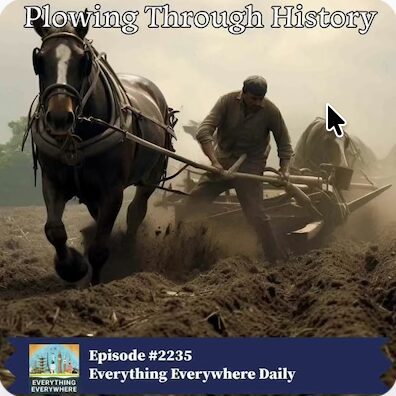
Listen: The Surprising History of the Plow
For most of human history, growing food depended on one deceptively simple piece of technology.
Over thousands of years, it evolved from little more than a sharpened stick into a machine that could transform entire landscapes, open new regions to farming, and support much larger populations.
Its development helped shape settlement patterns, economies, and even the rise of civilizations.
Learn more about the history of the plow on Spotify or Apple Podcasts.
Can I help?
Peace-of-Mind Recruiting
We help businesses recruit accounting, finance, sales and marketing talent, making it easy by providing an AI-driven affordable flat-fee, premium recruiting solution.
Everything is managed for you – from start to finish. That’s Peace-of-Mind recruiting.
Want to learn more? Let’s schedule a free consultation.
Know someone job searching?
Candidates can upload their resume directly to my candidate database.
Career Services
Did you know? I offer career services to help with job search, interview strategy, and navigating careers. Three career changes and the lessons I learned help me prepare you better.
Sometimes people are rusty and need job search or interview guidance if they haven’t been in the job market for a while. There is a strategy involved to land an interview, control the interview, and get an offer.
Learn how to compete better in the job market. Schedule time with me today.
If you need more robust executive coaching, I have an amazing network and happy to refer you. Please reach out to me at jason@noblesearchgroup.com.
Can you help?
Did you enjoy this newsletter? Please share it.
Have feedback? Send me a note: newsletter@noblesearchgroup.com
Know anyone who needs recruiting help? Referrals are appreciated.
Thanks for reading.